
Overview
Why Solar Changes the Equation
A conventional boat generator is, at its core, an internal combustion engine bolted into your hull. It burns fuel, produces exhaust, vibrates, requires oil changes, impeller inspections, cooling system flushes, and all the other routine maintenance that comes with any gasoline or diesel engine. It also takes up space below decks and adds meaningful weight to the vessel.
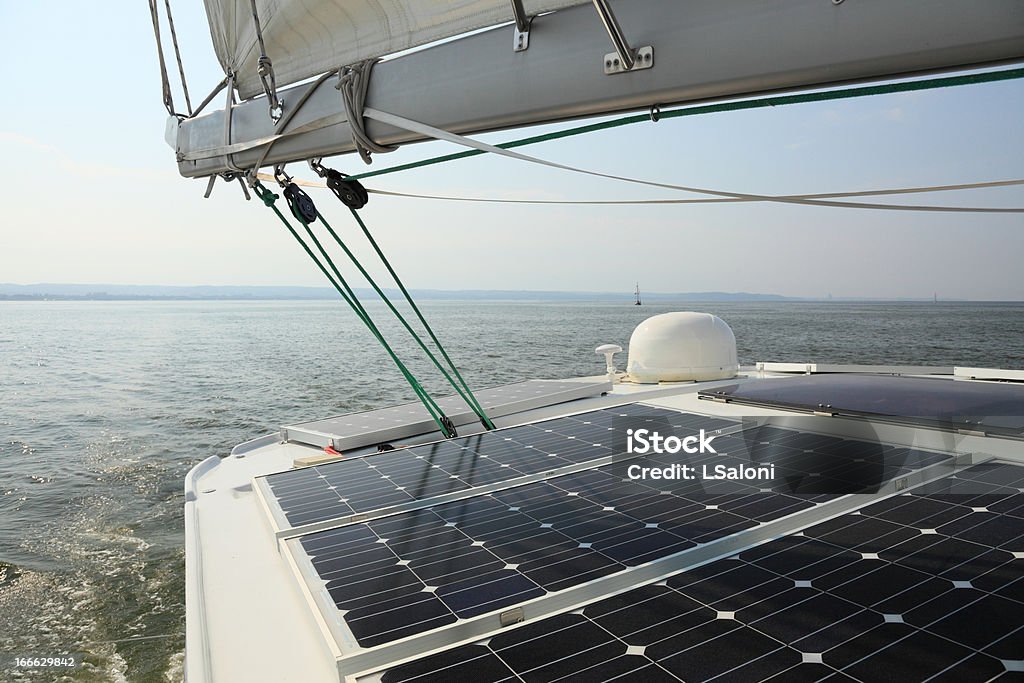
A properly engineered solar system eliminates the generator entirely. Your boat runs on clean, silent power drawn from the sun: no fumes, no noise, no fuel to carry or spill, and no secondary engine to maintain. When you're anchored in a quiet cove, you stay quiet. When you're offshore for two weeks, the panels work continuously without any input from you.
Beyond the comfort and environmental benefits, solar represents a genuine engineering improvement. Fewer moving parts means fewer failure modes. A battery bank charged by solar panels can power the same loads a generator would, with none of the operational overhead. Weight goes down, usable space goes up, and the system that replaces the generator is one you can go years without touching.
Basic Working Principle
How Solar Differs from a Generator
The fundamental difference between a generator and a solar array is how each produces power. A generator only makes electricity while it is running. Turn it off and the power stops. Solar panels, by contrast, produce power continuously as long as sunlight is falling on them. The output is passive and steady, not switched on-and-off by the crew.
This passive, continuous behavior is often misunderstood as a weakness. The common assumption is that because solar output is lower than a generator's peak wattage, it cannot meet the boat's electrical demands. That assumption conflates two different problems: peak power delivery and daily energy replenishment.
A generator must be sized to meet the highest instantaneous load the boat might draw: a windlass, an electric cooktop, an air conditioner. Since it has no storage, every spike in demand must be met in real time.
Solar panels charge a battery bank. That bank absorbs and stores energy slowly throughout the day, then delivers high bursts of power on demand (the windlass, the watermaker, the inverter) whenever the crew needs it.
Most day-to-day aboard loads are intermittent. The windlass runs for thirty seconds at a time. The microwave runs for two minutes. The refrigerator compressor cycles on and off. Because these loads are brief, the battery bank has time to recover between them. Solar panels do the recovery work quietly, in the background, all day long.
Sizing a solar system correctly means estimating the vessel's worst-case 24-hour power cycle, accounting for cloud cover, high-consumption days, and seasons, then specifying a panel array and battery bank large enough to produce a surplus over that cycle. Done right, the batteries are always full before the sun goes down.
Even when a generator is kept aboard as a backup, a well-designed solar system can reduce its run time dramatically. The solar system can automatically start the generator only when the state of charge falls below a set threshold, keeping noise and fumes to a minimum while ensuring the boat never runs flat.
System Types
Two Main Configurations
There is no single solar layout that fits every vessel. The right architecture depends on the size of the boat, how it is used, how much space is available below, and what the crew expects to run aboard. That said, there are two configurations that cover the majority of cruising and liveaboard applications.
In both systems, the engine start battery is kept completely isolated from the house bank. This isolation is deliberate and important. It ensures that, in the worst case, the engine alternator can always be used to recharge a depleted house bank. The vessel retains an independent recovery path no matter what happens to the solar system. Isolation also protects sensitive marine electronics on the house circuits from the heavy inrush current required to crank an engine. And in a genuine emergency, the entire vessel can be switched to run from the engine battery, keeping radar, navigation, and VHF radio alive even if the house bank fails completely. That capability can be the difference between making it home under your own power and being dead in the water.
System Configuration
Combined House Bank
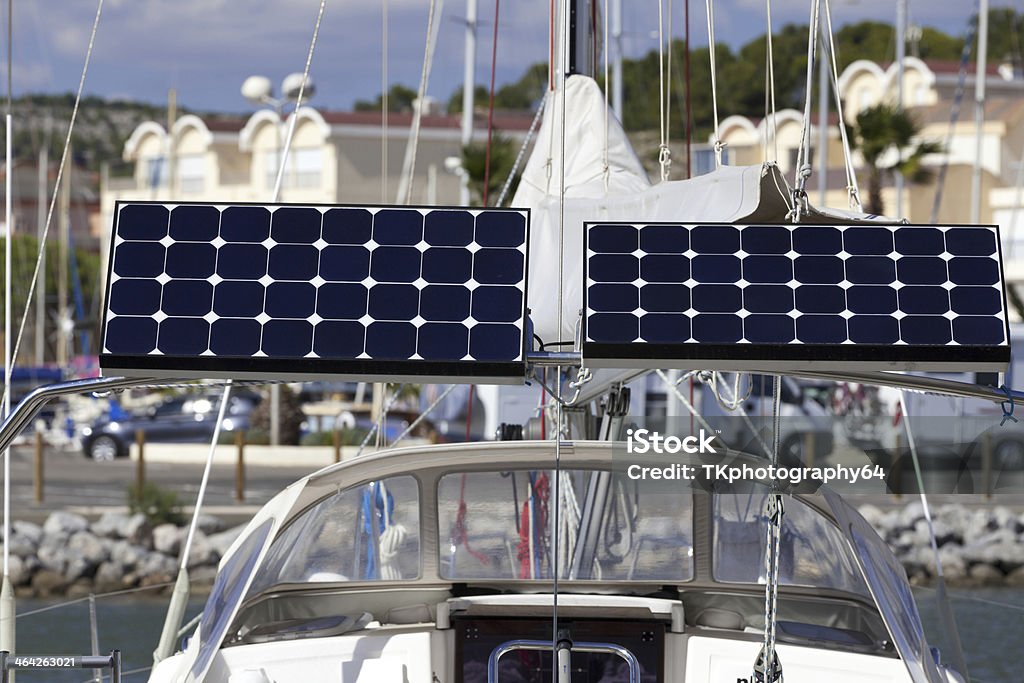
In this configuration, the inverter (the device that converts the battery bank's DC output to standard 120V household power) is tied directly to the main house bank. All AC loads and DC loads draw from the same pool of stored energy.
The inverter is typically bidirectional. When the boat is plugged into shore power, it acts as a battery charger, filling the house bank through the same connection. When the boat is unplugged and underway or at anchor, it reverses operation, converting battery power to AC for the crew's use. Solar panels feed into the same bank via an MPPT charge controller, maintaining the charge level throughout the day.
The practical experience aboard is simple: plug the boat in when you return to the marina, and let the system manage itself. While on the water, the panels keep the bank topped off. The crew monitors a single state-of-charge readout rather than juggling multiple banks.
Advantages
- Simple, single bank to monitor and understand
- Lower equipment cost and less complex installation
- Compact footprint suitable for smaller vessels with limited battery space
- Shore power integration is straightforward: one plug charges everything
Considerations
- AC loads and DC house loads compete for the same bank; high AC use can deplete reserves quickly
- Requires attentive power management on heavy-consumption days
- All loads share the same failure domain: if the bank is low, both AC and DC are affected
System Configuration
Split Inverter Bank
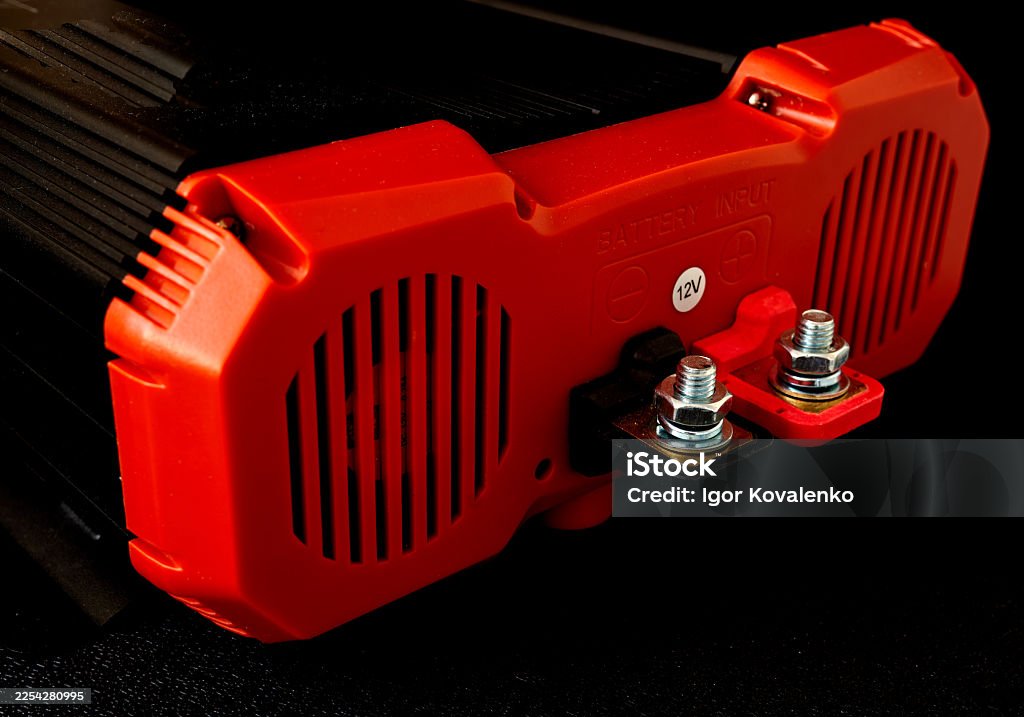
The split configuration uses two separate battery banks: a dedicated inverter bank for AC loads, and a separate DC house bank for all low-power DC circuits (navigation instruments, autopilot, VHF radio, bilge pumps, lighting, and similar loads).
This architecture requires more space, more sophisticated engineering, and a higher upfront equipment cost. In return, it provides meaningful operational and safety advantages that the right vessel will benefit from considerably.
The most important advantage is isolation of critical systems. Because radar, chartplotters, navigation lights, and VHF run from a dedicated DC bank, they cannot be accidentally depleted by high AC loads. A crew running an electric kettle, a watermaker, and an air conditioner simultaneously won't compromise the vessel's ability to navigate.
A secondary advantage is the ability to run the inverter at a higher voltage (48V is common) independently of the boat's 12V or 24V house system. Higher-voltage inverter systems carry the same power over smaller-gauge wire, reducing I²R conversion losses and allowing for more efficient long cable runs from the battery compartment to the AC panel. The DC house bank, running at standard 12V or 24V, remains compatible with all factory-installed marine electronics without any conversion.
Advantages
- Critical navigation and communication systems are isolated from high AC loads
- Inverter bank can run at higher voltage (48V) for improved efficiency and smaller wiring
- DC house bank requires less total capacity since most DC loads are low-power
- Cleaner failure boundaries: AC and DC issues are independent
Considerations
- Requires more physical space below decks for a second battery bank
- Higher equipment cost and more complex installation and commissioning
- Requires careful engineering to ensure proper charge management across both banks
Summary
The Right System for Your Vessel
Both configurations have genuine advantages, and the choice between them is an engineering decision, not a default. The combined house bank is the right answer for a 38-foot sloop with limited bilge space and a crew that prioritizes simplicity. The split inverter bank is the right answer for a larger passage-maker where space allows and the additional isolation of critical systems is worth the investment.
What both systems share is the underlying argument for solar itself: there is no boat too big, too small, too old, or too new to benefit from solar power in some form. The technology scales from a single 100-watt panel keeping a weekend boat's anchor light charged, to a 2,400-watt array powering an air conditioner and watermaker on a passagemaking catamaran.
Every project starts with an honest engineering assessment of the vessel and how it is actually used. That assessment drives the specification: panel count, battery chemistry and capacity, charge controller sizing, inverter selection, wire gauge, fusing, and monitoring. Done right, the system you end up with is one that works the first time and keeps working for years without demanding much in return.
Ready to go solar?
We'll start with a full assessment of your vessel and give you an honest picture of what a solar system would look like on your specific boat, no obligation, no generic quotes.
Talk to Us