
Overview
Navigation Has Come a Long Way from Sextant and Compass
Modern marine navigation is built on a complex network of electronics that must communicate in harmony. VHF radio, radar, AIS, chartplotter, autopilot, depth sounder, wind instruments, engine data, and satellite systems all need to talk to one another reliably and continuously. Getting that right requires more than plugging devices in and hoping they agree.
The consequences of a poorly integrated system do not announce themselves at the dock. They show up in conditions where you have the least capacity to deal with them: a radar that loses its AIS overlay in a rain squall, an autopilot that drops its GPS heading reference in a cross-sea, a chartplotter that reboots at the start of a night watch. You do not have time to debug a network issue in a storm. The system simply has to work.
That reliability is not a product feature you buy off the shelf. It is an outcome of correct installation, proper network architecture, and thorough commissioning. That is where we come in.
Network Standards
NMEA 2000 and NMEA-0183 Networks
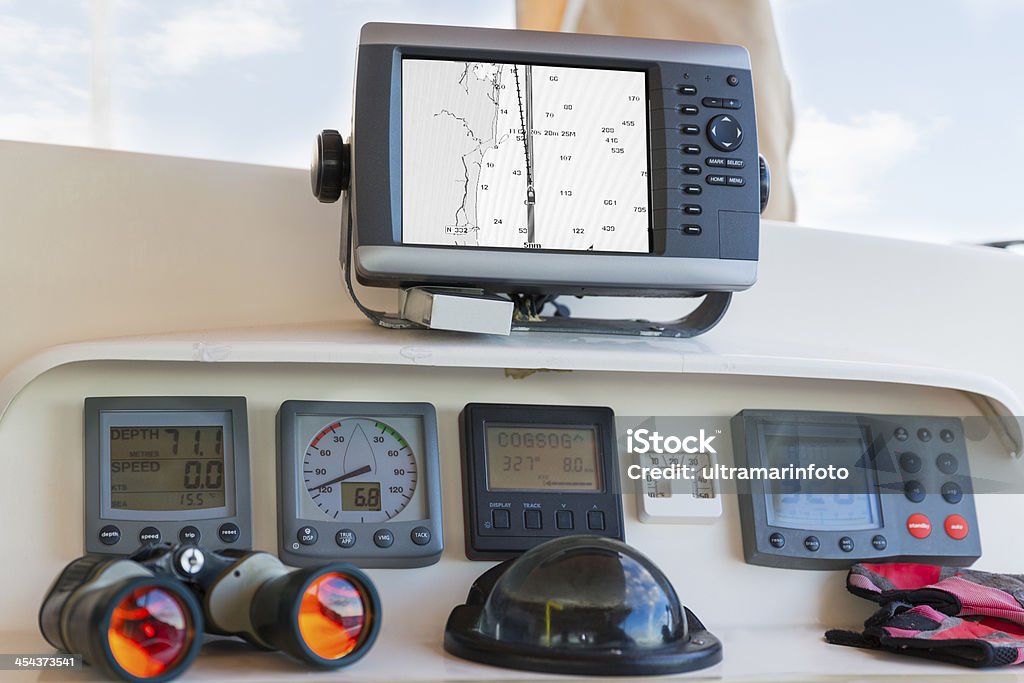
NMEA (National Marine Electronics Association) networks are the established standard for on-board communication between marine electronics, and both major versions remain in active use today. NMEA-0183 is the older protocol, transmitting data in one direction over a simple two-wire connection. NMEA 2000 (N2K) is the modern replacement, a true network that allows any device to both send and receive data from any other device on the same backbone.
In practice, a complete installation on most vessels involves a hybrid of both protocols, and often a proprietary manufacturer network as well. Garmin's OneHelm, Simrad's SonicHub, and Furuno's NavNet all overlay their own communication layers on top of the NMEA backbone. Managing that correctly, so that each device gets the data it expects in the format it understands, is the work of proper network design rather than plug-and-play setup.
The core value of NMEA standards is device interoperability. A Garmin chartplotter can display heading data from a Simrad autopilot. A Furuno radar can hand off AIS targets to a B&G multifunction display. When the network is built correctly, the brand of each device becomes irrelevant to the crew. Every instrument shows consistent, shared data.
We also fit vessels with bridging hardware that translates N2K data to WiFi or Ethernet, making the entire navigation network visible on a tablet or smartphone. From a phone in the cockpit, a crew member can monitor boat speed, depth, wind, AIS targets, GPS position, battery state, and engine data simultaneously, without touching the helm instruments. This is particularly useful on passagemaking vessels where a watch crew benefits from portable instrument access throughout the boat.
Every network installation we perform is fully documented. You receive a wiring diagram showing each device, its network connections, and its configuration settings, so any competent technician can service the system years from now without starting from scratch.
Instruments and Alarms
The Systems That Keep You Safe
AIS and radar are the two fundamental aids to collision avoidance that every offshore vessel should carry. AIS (Automatic Identification System) receives position, speed, and heading data broadcast by other AIS-equipped vessels and plots them on your chartplotter. Radar detects everything in range regardless of whether it is broadcasting, including unequipped small craft, debris, and weather. Together, they give the navigator a layered picture of what is sharing the water.
A properly fitted yacht does not stop there. The goal is a system that monitors all critical vessel functions continuously, so the navigator can make sound decisions in any conditions without having to manually check individual gauges or wonder whether the bilge is dry.
What a Complete System Monitors
- Collision avoidance: AIS transponder with SART capability, radar with ARPA target tracking, and chartplotter integration so AIS targets and radar returns are displayed together on a single screen
- Bilge alarms: Float-switch bilge alarms with audible and visual alerts at the helm, wired independently of the bilge pump circuit so a failed pump does not also silence the alarm
- Engine monitoring: Over-temperature, low oil pressure, high exhaust temperature, and alternator failure alerts routed to the NMEA network and displayed on the helm chartplotter alongside navigation data
- Anchor watch and GPS alarms: Configurable drag alarms that wake the crew if the vessel moves outside a defined radius overnight, integrated with the chartplotter rather than relying on a standalone app
- Tank levels: Fresh water, gray water, black water, and fuel levels monitored via NMEA sensors and displayed on a single instrument panel or MFD page
The difference between a vessel with these systems integrated and one where each alarm is a standalone unit with its own beeper is significant in a real emergency. A connected system gives the navigator a single point of awareness. A collection of disconnected beepers gives the navigator a noise problem at exactly the wrong moment.
Equipment Protection
Protecting Your Investment
Marine electronics are expensive, and they live in one of the harshest electrical environments in existence. Shore power quality varies dramatically from marina to marina. Alternators surge and spike when loads change. Galvanic corrosion on underwater connections creates ground loops that induce noise into sensitive circuits. Lightning and nearby radio transmitters cause transient spikes that most consumer electronics are not designed to absorb.
We recommend a set of protective systems as standard on any electronics installation, and strongly recommend retrofitting them to any vessel that has experienced intermittent or unexplained equipment failures. In many cases, the failure that was attributed to a defective unit was actually caused by an electrical environment that will destroy the replacement too.
Common Hazards We Address
- Voltage irregularity from shore power and charging systems
- Alternator load dump spikes during sudden electrical disconnects
- Galvanic corrosion creating ground noise on instrument circuits
- RF interference from VHF, radar, and SSB transmissions
- Lightning transients on antenna feed lines
Protective Equipment We Use
- Sterling Power voltage stabilizers and alternator protection devices
- Victron isolation transformers for shore power conditioning
- Xantrex and Blue Sea galvanic isolators and surge suppressors
- Properly rated antenna lightning arrestors on each feed line
- Dedicated instrument power circuits with filtered bus bars
We are equally comfortable assessing an existing installation and recommending targeted upgrades as we are building a new system from scratch. If you have equipment that fails intermittently, loses its configuration, produces erratic readings, or simply does not behave the way it should, bring us aboard. The cause is almost always identifiable, and the solution is usually simpler than replacing the equipment.
Summary
It Needs to Just Work
Navigation electronics are not a luxury on a vessel that goes offshore. They are the primary means by which the crew maintains situational awareness, avoids traffic, tracks weather, and monitors the health of the boat. The one thing they cannot do is require attention at the moment they are needed most.
A well-engineered electronics installation disappears into the background. The instruments show what they should show. The alarms trigger when they should trigger. The network does not need to be restarted. The crew can focus on sailing the boat rather than managing the technology meant to help them do it.
That outcome requires getting the design right before the first cable is run, and commissioning the system thoroughly before leaving the dock. We do not hand the vessel back until every device has been verified underway.
Ready to upgrade your navigation suite?
We will start with a full review of your existing electronics, identify gaps and integration issues, and give you a clear proposal for a system that works as a whole rather than a collection of individual devices.
Talk to Us